
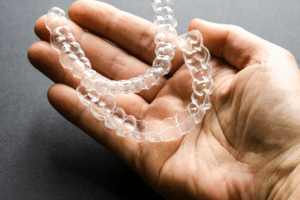
For patients in Gurnee, IL and surrounding communities, Honey Orthodontics offers personalized Invisalign treatment based on each patient’s needs. Dr. Oana Honey, a Board-Certified Orthodontist, can check the spacing, tooth position, and bite to see if Invisalign is a good fit. The right plan depends on how the teeth need to move and whether clear aligners can create a stable, balanced result.
Can Invisalign Close Different Types of Tooth Gaps?
Invisalign can treat many spacing problems, including one gap or several gaps across the smile. The aligners place gentle pressure on the teeth so they move toward their planned positions over time.
The size and location of the space can affect treatment. A small gap between two teeth may need fewer movements than several spaces in the upper or lower teeth.
The American Association of Orthodontists explains in its teeth-spacing guide that clear aligners can be a good choice for mild to moderate spacing. It also notes that the cause, size, and location of a gap can affect the treatment plan.
The goal is not only to close a space. The teeth should also end in positions that support a balanced bite and a healthy smile.
What Makes Someone a Good Candidate for Invisalign for Gaps?
A good candidate has spacing that can be treated with clear aligners and can wear the trays as directed. The size of the gaps, the bite, and the tooth movements needed all play a role.
Some gaps are easier to close than others. A tooth may need to turn or move in more than one direction before the space can close well. If the bite also needs to change, the treatment plan may include several steps at the same time.
Clear aligners are removable, so daily habits matter. Patients need to follow their wear plan and keep the trays clean. Good brushing and flossing are also important during treatment.
How Does Invisalign Move Teeth Together to Close Gaps?
Invisalign uses a series of custom clear aligners. Each set is made to move the teeth a small amount. As you change to the next set, the teeth keep moving toward their planned positions and the gaps can get smaller.
Honey Orthodontics uses digital scanning and treatment planning to map tooth movement. A 3D scan creates a detailed model of the teeth. This helps plan each stage before treatment starts.
Invisalign aligners should usually be worn for 20 to 22 hours each day. They are removed for eating, drinking anything other than water, brushing, and flossing. Wearing them as directed helps treatment stay on schedule.
If the trays are left out too often, the teeth may not move as planned. This can slow progress and may affect the treatment schedule.
When Might a Tooth Gap Need More Than Invisalign?
Some gaps need more than tooth movement alone. Invisalign may still be part of the plan, but other dental care may also be needed.
A missing permanent tooth is one example. In some cases, the space can be closed. In others, the teeth may be moved to leave enough room for a future tooth replacement.
Tooth size can also matter. If a tooth is smaller than normal, closing the gap may not create the best shape for the smile. Dental bonding or another dental treatment may be used after the teeth are moved.
A new or growing gap in an adult also deserves a closer look. Gum disease or bone loss can reduce support around the teeth and cause spaces to form or become wider. Those problems may need care before or along with orthodontic treatment.
Not every gap needs to be fully closed. The right choice depends on what caused the space and what will support the teeth and bite over time.
Ready to See If Invisalign Is Right for Your Gaps?
Invisalign can close many tooth gaps, but the best plan depends on the type of spacing and the movements needed.
At Honey Orthodontics in Gurnee, IL, Dr. Honey can check your smile and explain whether clear aligners are a good option for your needs.
Schedule a consultation today to find out if Invisalign can help close your gaps and improve your smile.