
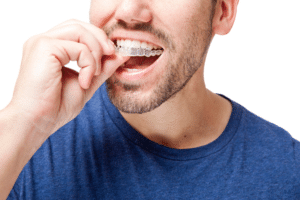
At Honey Orthodontics in Gurnee, IL, Dr. Oana Honey, a board-certified orthodontist, checks the full bite before recommending treatment. The right option depends on what causes the overlap and whether removable aligners can move the teeth safely.
What Does an Overbite Really Mean?
An overbite is the amount that the upper front teeth cover the lower front teeth. A small amount of overlap is normal. Too much overlap can lead to uneven wear, gum irritation, or a bite that does not feel balanced.
Some overbites are mainly dental. This means the teeth may be tilted, crowded, or placed in a way that creates too much overlap.
Other overbites are linked to how the upper and lower jaws line up. Some patients have both dental and jaw-related causes.
This difference matters because Invisalign moves teeth. It does not change the size or shape of the jaw bones. Aligners can work well when moving the teeth will improve the bite. A problem tied strongly to jaw position may need another approach.
When Can Invisalign Correct an Overbite?
Invisalign can correct certain mild to moderate overbites when removable trays can make the needed changes. The teeth and gums must also be healthy enough for orthodontic care.
For example, aligners can help when tilted or crowded front teeth cause too much vertical overlap. The trays can move selected teeth, create space, and improve how the bite closes.
Treatment can also help when an overbite appears with mild spacing or other alignment problems. In these cases, one plan can improve both tooth position and bite function.
The American Association of Orthodontists explains that clear aligner treatment can address crowding, spacing, and some overbites. Aligners are not right for every patient, so an orthodontist must review the amount and type of change needed before treatment begins.
Consistent wear also matters. Leaving the trays out for long periods can slow progress and keep the next aligner from fitting well.
Why Would an Overbite Need More Than Aligners?
A severe overbite, a strong jaw-related cause, or difficult vertical tooth movement can make aligners alone less predictable.
With a deep bite, the lower front teeth may touch the roof of the mouth or the gum tissue behind the upper teeth. The condition may also cause uneven wear or affect how the front and back teeth meet.
Braces provide steady force and can guide difficult tooth movements more directly. They may be a better choice when the teeth need major vertical changes or careful root movement.
Age and growth can also shape the treatment plan. A child or teen may need care that considers jaw growth. An adult with a larger jaw difference may need another type of correction because growth is complete.
This does not mean braces are always better than Invisalign. Each option has strengths. The best choice depends on what the bite needs, not only on appearance or convenience.
When Are Attachments or Elastics Needed?
Attachments and elastics can support Invisalign when smooth trays cannot make every change on their own.
Attachments are small, tooth-colored shapes placed on selected teeth. They help the trays grip the teeth and guide movements such as turning, tipping, or moving a tooth up or down.
Elastics add force between the upper and lower teeth. They can improve how the bite fits together and help guide both arches.
Using attachments or elastics does not mean Invisalign has failed. These tools are often part of the plan from the start because they help the trays make certain changes more effectively.
What Should You Expect Before and During Invisalign Treatment?
Before treatment, your orthodontist checks the cause and depth of the overbite. During treatment, you wear a planned series of trays and return for progress visits.
The first exam reviews tooth position, bite depth, jaw alignment, crowding, spacing, and signs of wear. Digital scans, photos, or X-rays may be used to study the bite and plan each step.
If Invisalign is recommended, each tray moves selected teeth a small amount. You will wear each set for the time directed by your orthodontist before moving to the next one.
The aligners are removed for meals, brushing, and flossing. They need to stay in place for most of the day and night so treatment can stay on track.
At progress visits, the orthodontist checks the fit of the trays and how the teeth are moving. Some patients need extra trays near the end of treatment to improve the final result.
After treatment, retainers help hold the teeth in their new positions. Wearing them as directed lowers the chance of future shifting.
How Can You Find Out Which Treatment Fits Your Bite?
An orthodontic exam can show whether aligners can make the changes your bite needs. The exam considers the health of your teeth and gums, the depth of the overbite, and how complex the correction may be.
At Honey Orthodontics, Dr. Honey helps patients from Gurnee, IL and surrounding communities compare Invisalign, braces, and any added tools that may be needed.
Schedule a consultation to learn which treatment can improve your overbite and support a stable result.